This review is from the readmeleadme (or “Lit-mi Lit-mi”) reading group.
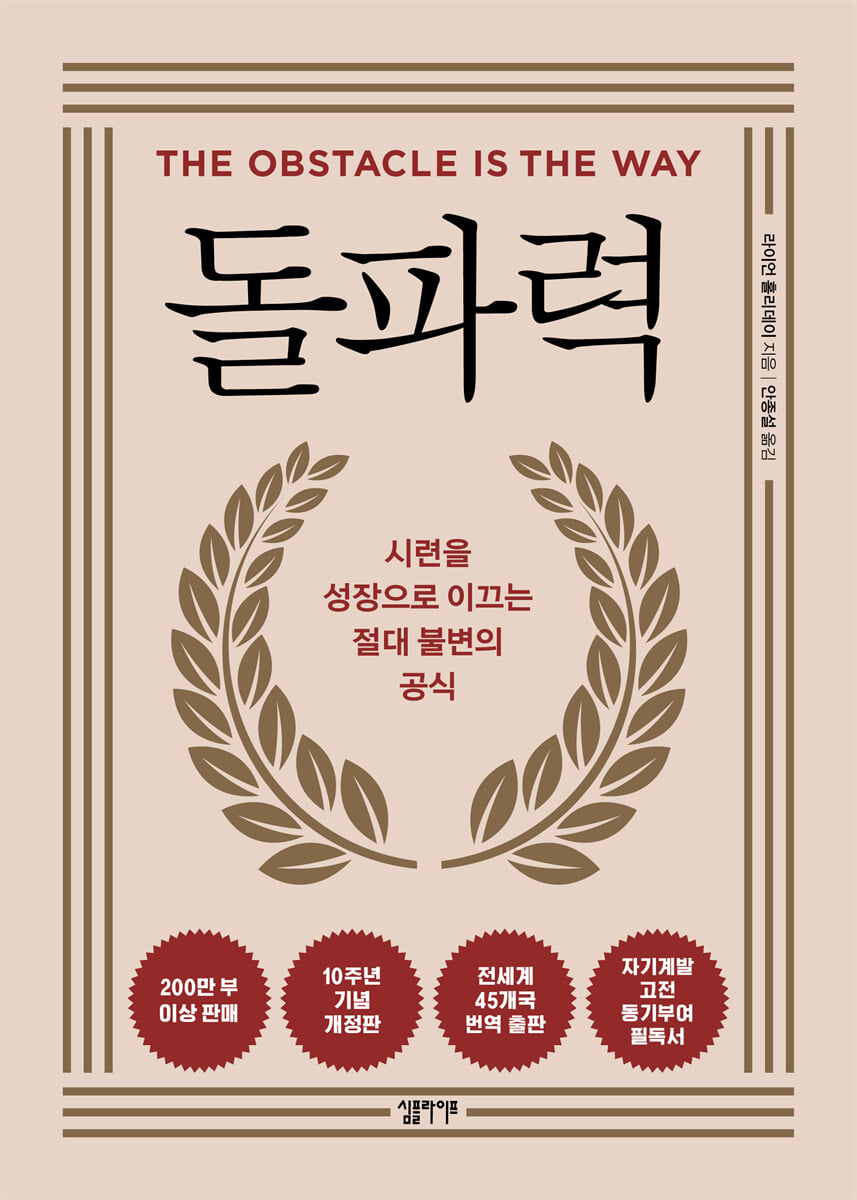
The Obstacle is the Way: The Timeless Art of Turning Trials into Triumph
Ryan Holiday, translated into Korean by Ahn Jong-seol | SimpleLife | November 11, 2024
Original title: The Obstacle Is the Way
Where I’m starting from
This was the book I picked up to clear my head at the start of the new year.
A lot happened last year, and during the brief stretch I’d stopped to rest, the aftermath I’d expected to recover from kept getting worse instead. Body and mind both went through a hard time. What saved me, though, was already knowing this: the moment I’d changed my environment, this was an inner problem of mine, not a problem with anything else.
It was the same as 2020, when I realized I had to wind down the company. I figured it would take some time, but I expected it to be a little faster than last time. Somehow, it lasted longer. I avoided looking inward and turned my attention to other things, to anything outside.
Thankfully, starting in December, I dragged a body that had been carrying injuries and inflammation back upright and started exercising again. Not like before, but a little at a time. I tightened the life balance I’d let collapse under the excuse of “rest”, and oddly, I came back more energetic than I had been, able to focus longer, getting my routines back. The inner repair started.
To inherit the essence of Stoic philosophy, to make calm rational judgments, to not be afraid of pushing forward again after any failure or setback (to actually have “breakthrough power” inside me), maybe it just needed some time. A life without failure is a life without challenge, and there’s nothing as addictive and as harmful as falling into self-justification and self-pity.
I spent enough time in self-justification and self-pity to learn this: all of it was me being addicted to my own feelings and thrashing around in them. When I finally looked at myself with reason, none of it was anything. It was already over.
The version of me who was supposed to take it all on the chin and keep going was nowhere to be found. I’d ended up in a loop of self-justification, self-pity, and blaming other people, hating myself for it, then doing it again. That stretch is finally a little settled now.
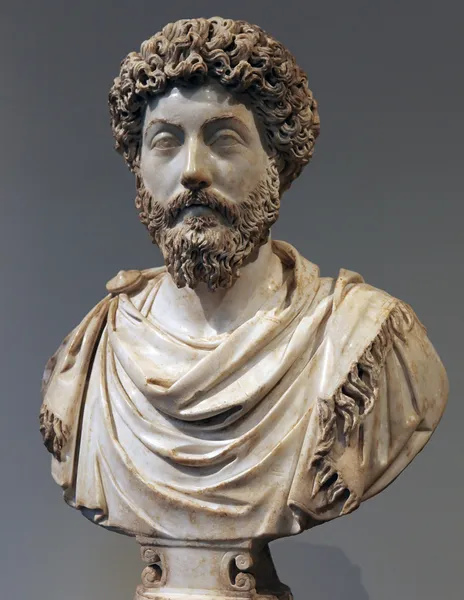
Marcus Aurelius (16th emperor of Rome, one of the Five Good Emperors, the philosopher-king).
In this moment, judge objectively. In this moment, act with devotion. In this moment, willingly accept whatever happens. That’s all that’s needed.
Marcus Aurelius (translated by author)
The thing I loved most while reading The Obstacle is the Way was this: there is no past, no future. There’s only the present, given to everyone equally. And every good thing and bad thing that happens to us, the universe makes no judgment about any of it. These are the points Marcus Aurelius keeps hammering on in Meditations, which I’m reading alongside this book.
The book’s message is simple. In spite of everything that happens to you, you have to stand back up and keep going. He doesn’t cheer you on with “you can do it”. He says you should do it, that not doing it isn’t an option. Do your duty, he says, with no softness in the voice.
The Obstacle is the Way: perception, action, will
The book lays out three stages.
The starting point is the stage where we look honestly at our problems, our attitudes, our ways of approaching things (perception). Next is the stage where we use heat and creativity to actually clear the obstacle and create opportunity (action). The last is the stage where we cultivate and sustain the inner self that can deal with repeated failure and difficulty (will).
The three axes are tightly linked. Without perception, you can’t act correctly. Without will, you can’t endure repeated failure. Through this framework, Ryan Holiday gives Stoic philosophy a modern reading.
Perception: see it objectively
Hold an objective view. Control your emotions and don’t lose your sense of balance. Work to find the positive elements. Don’t get excited or rattled. Focus on what you can control.
The core of Holiday’s perception is separating emotion from fact. He uses George Clooney as an example.
From then on, Clooney started bringing this perspective into auditions. Instead of just pushing his acting ability, he explained why he should be the one cast for this role.
Clooney redefined an audition from “a place where I get judged” to “a place where I go to solve a problem”. A shift in viewpoint changed the reality. Holiday organizes this into two concepts.
- Context: a sense of the bigger picture, looking at the world as a whole, not just what’s right in front of you.
- Frame: your own way of looking at the world and the events inside it.
Looking back, I’d poured way too much energy into things I couldn’t control. Regret about what was done, anxiety about what hadn’t come yet. The things I could actually do right now? I looked away from those.
What you think about often, that’s what you become.
This line landed especially hard. While I was thrashing in the swamp of self-pity, I was becoming the pity itself. I was repeating the same thoughts every day, and those thoughts were defining me. If thoughts make me, what am I supposed to be thinking?
The way we see the world depends on the way we look at things like this. Does our perspective actually give us ‘perspective’, or is it the very thing causing the problem?
Holiday asks: is perspective the solution, or is it the problem? In my case, perspective itself was the problem. I couldn’t see the situation objectively, and the emotion warped everything.
Don’t forget that inside every obstacle is a hidden opportunity to make a better reality.
A shift in how you look at failure. This isn’t about forcing yourself to think positive. It’s about looking at the situation honestly, and finding what you can learn inside it.
Action: just start
The one thing all fools have in common is that they’re always getting ready to start.
Seneca
How much “preparation” did I do during my time off? I’ll start once I recover. I’ll start once I feel better. I’ll move once my head is clear. Endless preparation. And while I prepared, time kept moving.
Holiday hits this attitude head-on.
We often live in this delusion that the world will accommodate us. So at the moment we should be acting, we dawdle. We jog along leisurely when we should be sprinting at full tilt.
It wasn’t that this line stung. It was that I saw myself in it exactly. I knew the situation was urgent and I was strolling like it was a Sunday jog. While I dawdled, the problem grew, and the opportunity walked away.
The truth is, after I closed the company in 2020, I told myself I’d never start one again. And here I am running a company. My wife and I are building a new product together. The past failure had stayed with me as a kind of trauma, and for a while I think I was just “getting ready”. Once it’s perfectly prepared, once the market is certain, once I have the confidence. That day never came.
In the end, I just started. Not perfect, not certain, no confidence. As Holiday puts it, “I’ll do it tomorrow” is the most cunning lie. Tomorrow doesn’t come. When today’s tomorrow becomes today, another tomorrow shows up.
Don’t wait to live properly. Life slips by in the meantime.
Only action changes reality. Thinking alone, planning alone, resolving alone, none of it changes anything. Action doesn’t have to be perfect. You just don’t stop.
Will: accept the failure
Remember that the world is always trying to send you a clear message about the failures and actions you’ve committed. It’s a kind of feedback. It’s like an exact instruction manual for how you can grow from here.
Failure isn’t the end. It’s feedback. That difference in perspective changes everything. If you fear failure, you stop trying at all. If you take failure as feedback, you can try more.
Holiday explains the essence of will this way.
There have always been people who turn adversity into opportunity. They never give up. They don’t fall into self-pity. They don’t fool themselves with the fantasy that an easy answer is about to appear. They focus on the one necessary thing: staying alive and creative until the end.
“They don’t fall into self-pity” is the line that stuck. During my time off, I’d become a professional at self-pity. Holiday hits this attitude head-on.
Instead of acting like Demosthenes, you sink into helpless, hollow thinking and turn away from the chance to grow another step. Even when there’s a clear opportunity to find the problem and find the solution, you waste weeks, months, even years.
A line from Nietzsche comes back to me.
What doesn’t kill me makes me stronger.
You shouldn’t misread that line, though. The pain itself doesn’t make us stronger. How we receive the pain, how we walk through it, that decides us. Holiday underlines this too.
No, the problem is exactly as hard as we think it is. The worst thing that can happen isn’t the event itself, but losing your reason because of it.
Remember that this moment isn’t your life. It’s just one moment of your life.
The hardness of right now feels like it’ll last forever. It won’t. This passes too. Holiday also talks about the art of acquiescence.
Stoic philosophy gave this attitude a beautiful name. They called it ‘the art of acquiescence’.
Accept what you can’t change, focus on what you can. That’s the essence of will.
Meditations: live in the present
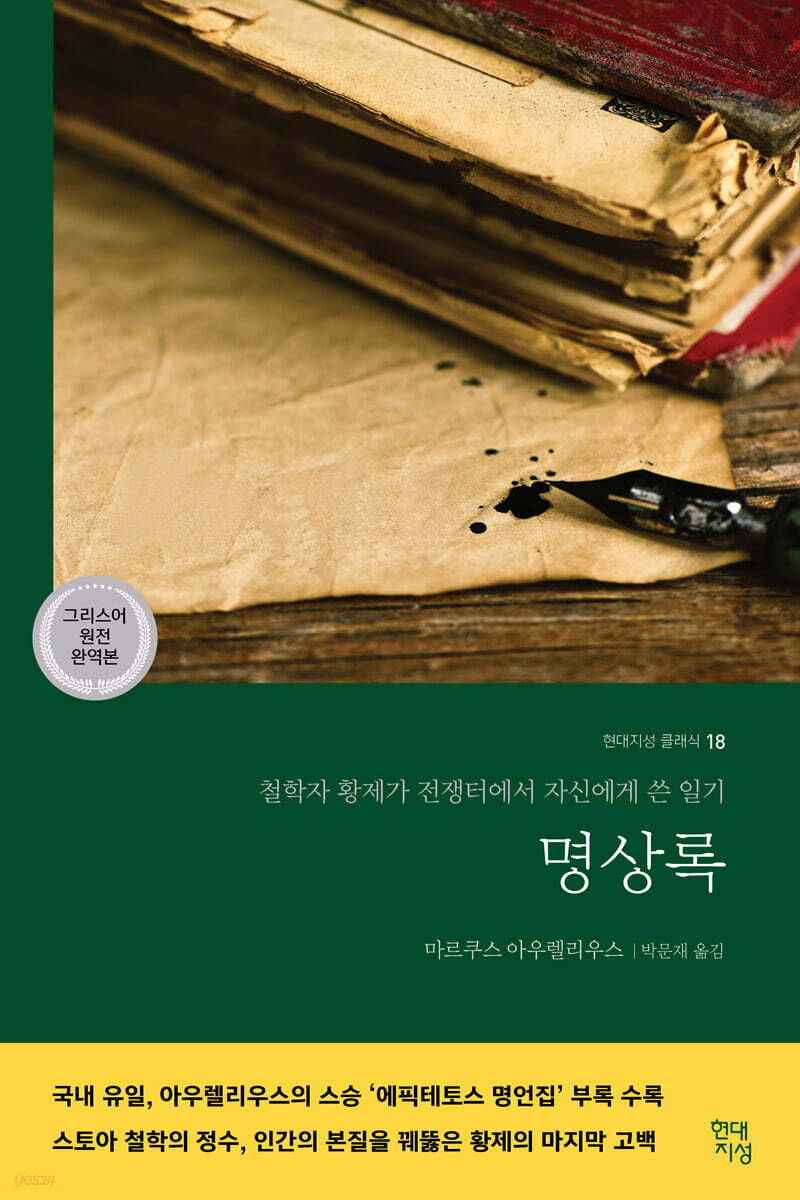
Reading The Obstacle is the Way led me back to Meditations. If Holiday is the modern reading of Stoic philosophy, Marcus Aurelius is the source. It’s stunning that words written by a Roman emperor almost two thousand years ago still hold up.
Get up and do your duty
When the day breaks and you don’t want to get out of bed, think to yourself: “I am rising to do what a human being is here to do. I was born for this work, I came into the world for this work, and I’m still complaining and resenting it? I wasn’t born to lie under the covers and enjoy the warmth.”
There are mornings when I open my eyes and don’t want to get up. Honestly, those mornings happened a lot more than the other kind. And Marcus Aurelius was the emperor of Rome. He didn’t want to get up either. He got up anyway. He had work to do.
He’s unbending about duty.
In every moment, behave as a Roman and as a man, with unornamented dignity, with comradeship, with independence, with a sense of justice. Carry out the task in front of you accurately, carefully, without selfishness. Throw away every other distraction.
The word “duty” can sound heavy. But think about it: the fact that there’s something I have to do is itself proof I’m alive.
Every time you do something, do it as if it were the last thing you’ll do on this earth. Don’t deliberately step outside the control of reason and follow your emotions. Don’t get caught by hypocrisy, selfishness, or resentment about the fate given to you. If you can do that, you can do anything.
Marcus stresses “not following your emotions willfully”. Acting under the control of reason. That’s the core of Stoic philosophy.
What is coming is on its way
Don’t live as though you’ll live a thousand years. What’s coming is already coming for you. While you’re alive, do your best to be a good person.
You probably won’t have time to read the excerpts you’ve been collecting. So if there’s something that worries you, while time still allows, throw away every other empty hope, and pour all your strength into completing that one goal. Save yourself.
Memento mori. Remember death. This isn’t a pessimistic thought. It’s the opposite. Because time is limited, this moment matters. The books I’ve stacked up to read someday, the things I’ve put off doing someday. “Someday” might not arrive.
Marcus organizes the insight about time like this.
Even if you could live three thousand or thirty thousand years, remember that what passes is only the life you’re living right now. You don’t live any life other than the life that is passing.
No one can take from you what you don’t possess, and every person possesses only this present moment, the same way. Whoever you are, you only ever lose the present moment.
What we have is only the present. The past is already gone, the future hasn’t come yet. The thing we can lose, the thing we can possess, is only the present.
Remember how many chances the gods have given you, and how you’ve never accepted a single one. Remember how long you’ve been putting it off.
Reading this line, I looked back on the past year. How many chances I’d put off, looked away from, pushed to later.
Fortune, not misfortune
Don’t say, “this happened to me, what a misfortune.” Say instead, “this happened to me, and yet I’m not destroyed by what happened, I’m not afraid of what’s coming, I haven’t been damaged at all. What a piece of fortune that is.”
Marcus puts this perspective even more crisply.
“This is not misfortune. The fortune is that I keep my own nature even when these things happen to me.”
The first time I read this passage, I had a hard time accepting it. While you’re going through something hard, saying “this is fortune” isn’t easy. But thinking about it carefully, the fact that I made it here is itself the proof. I wasn’t destroyed. I’m still here. I’m writing.
Marcus explains the real meaning of “everything is in the way you think about it”.
“Everything is in how you think about it” means that external events and circumstances (the value-neutral things that have nothing to do with happiness or with good and evil) get their character and influence not from the events themselves but only from how a person receives them.
The situation itself is value-neutral. Whether to see it as misfortune or as a chance to grow is entirely my choice.
Stand on your own
Don’t lose your cheerfulness, do it without outside help, by your own strength. Push away the comfort other people offer and stand on your own. You have to stand straight on your own. Don’t get propped up by another person’s help, and don’t let anyone else stand you up straight.
In the end, the only one who can stand me back up is me. Blaming the environment, blaming other people, the same infinite loop. While that time was passing, the things I actually could do, I didn’t do.
Marcus also talks about the retreat into yourself.
Whenever you want, you can withdraw into yourself and rest. There’s no better place to be free of every worry and every concern, no quieter or more peaceful place, than your own mind.
Don’t look for peace outside. Find it inside. Even rest happens inside you.
Don’t see something the way someone forces you to see it, or the way someone wants you to see it. See everything as it is.
The person who doesn’t worry about what others say, do, or think, and only cares about getting their own words and conduct right, has a peaceful and abundant mind.
Stepping out of the gaze of others and walking your own path. As emperor, Marcus must have lived under enormous expectation and criticism, and he still got to this place. That’s the part that astonishes me.
Wrapping up
The Obstacle is the Way and Meditations. Two books from very different times, telling the same story.
Don’t get stuck on the past. Don’t be afraid of the future. Focus on this moment. Take failure as feedback. And go forward without flinching.
A few failures aren’t a reason to stop. The opposite, actually. Try more, fail more, learn more. A life without failure is a life without challenge.
After I closed the company in 2020, I thought I’d never start one again. And here I am running a company again. The past failure didn’t disappear. I just learned that it isn’t a reason to block today.
It took a long time to climb out of the loop of self-justification and self-pity. But I think that time was needed. At least now I know. Being swept by an emotion and feeling an emotion are different things. Feel the emotion, but don’t get addicted to it. Maybe that’s what Stoic acceptance is.
| What I learned | Action item |
|---|---|
| Thoughts make me | Trade self-pity for objective observation |
| Just preparing is doing nothing | Execute one small action you can do today |
| Failure is feedback | After failing, write down the lesson instead of blame |
| Only the present is ours | Stop spending time on past regret and future anxiety |
Don’t live as though you’ll live a thousand years. What’s coming is already coming for you.
Marcus Aurelius
I’ll focus on the present. Do today’s work. That’s all there is.
Questions for the reading group
1. What was your biggest recent failure, and how did you “break through” it? What are you doing now because of it? Share how you got past it and how your perspective shifted.
The biggest failure was a failure of the heart. Last year my body and mind were both in bad shape, so I fell into perfectionism and kept delaying the project I was on. I chewed on past regrets and failures over and over. In particular, I realized the way I’d wound down the team was a failure, and I couldn’t get out of that for a long stretch. The environment was hard, sure, but I kept thinking I could have closed it out better. The point, though, was that I kept chewing on the failure long after I’d left it. I wrote about this in the review too, and there’s a similar memory from when I closed Todait. Coming out of an organization without going into a new one for a long time made me sink into the failure and the self-pity more and more.
The way I’m getting past it is writing. Recently I’ve been writing blog posts and even fiction, all of it for the sake of “breaking through” and getting out. The ideas that had been floating around in my head and chest got concrete on the page, and as they got concrete my heart emptied out a little, and I started to see what to do next. The knots inside me feel like they’re being released. I wish I’d written sooner. Now that I’ve written some, I feel like it’s time to read again and refill. The line “you have to empty out before you can fill up” really resonates with me these days.
2. What was the biggest change in your thinking from reading this book?
I’m someone whose views were already mostly in line with the book, so it wasn’t so much a shift as it was reinforcement. The line that’s staying with me is that the constraints of reality can themselves be the path.
3. Push when you should rest, and burnout comes. Rest when you should push, and you stagnate. How do you tell the difference?
I clearly did the opposite. What matters in the end is the result, the outcome. If something feels like it’s dragging on too long without a clear result, it’s time to revisit the direction. Rather than just deciding whether to rest or not, I think it’s important to keep a daily rhythm, hold the routines, focus harder when needed, and keep enough room in your mind to look back. That said, if I’m just tired, pushing through is fine. If the environment isn’t going to change no matter what I do, a change of direction is the thing to do.
4. Pick two passages you underlined. Why those two?
What doesn’t kill me makes me stronger. (…) No, the problem is exactly as hard as we think it is. The worst thing that can happen isn’t the event itself, but losing your reason because of it.
There’s a scene in Evan Almighty where the family is leaving Evan, who’s suddenly building an ark in modern times. There’s a conversation between Morgan Freeman as God and Evan’s wife at a diner that I still remember.
If someone prays for patience, do you think God gives them patience, or does He give them the opportunity to be patient?
If they pray for courage, does God give them courage, or does He give them the opportunity to be courageous?
If someone prays for their family to be closer, do you think God just zaps them with warm, fuzzy feelings, or does He give them opportunities to love each other?
The family eventually returns to Evan, the flood actually arrives, and the biblical scene plays out. It’s a movie that could come across as a little corny and easy to dismiss, but as someone who isn’t a Christian, that scene hit me hard, and it kept coming back to me as I read this book.
In this moment, judge objectively. In this moment, act with devotion. In this moment, willingly accept whatever happens. That’s all that’s needed.
I opened the post with this line, and the Stoic view that everything in the world is value-neutral, and that what matters is reason and doing your duty, is the line that helps me hold my emotional energy steady, instead of getting destabilized by small things or overly excited. The value I keep coming back to is: focus on this moment, above all.
In Peaceful Warrior, another movie I love, the mentor “Socrates” tells the protagonist:
A real warrior doesn’t give up what they love. Instead, they find the reason to love what they’re doing right now.
5. In a moment when control is completely gone, what attitude can you still hold?
What the book is finally saying is that my thoughts, my emotions, my judgments are all things I decide. It’s hard, but how I think in such a moment, how I feel, how I judge, those are still things I can choose. Of course, I don’t think you should drive yourself when you’re already collapsed (you need time to digest the hard parts too). Even so, holding your mental ground, judging with reason, and doing what you can do is the attitude that really matters.
6. Did this book make you newly aware of how you handle problems?
For me, reasoning through work is relatively easy. With people, or with ordinary daily things, I get emotionally sensitive and irritable easily. Over nothing, really. Paradoxically, I steady myself for the big things and accept them with grit, but I crumble easily on small things. So the various ways the book talks about handling problems aren’t only for our big goals. They’re also for keeping daily peace, and I came away resolving to give myself a little more room.
7. (The book title in Korean is a translation, but the translator chose it for a reason.) What does the word “breakthrough” mean to me?
Life is hard. Or maybe it’s hard because we think it’s hard. The word “breakthrough” is a bit corny, but maybe you need that level of resolve to get through the many problems we face with a little less shaking and a little less collapsing. Through this book, I hope all of us can find the courage and strength to “break through”, whatever hardship and difficulty come.
8. Are you results-oriented or process-oriented? How do you balance them?
I used to be process-oriented, and now I’m fully results-oriented. From running a company and a team, and from failing, what I’ve felt is that whatever the process was, the evaluation of that process changes completely depending on the result. I don’t think the process is unimportant. The point is that results are at the center.
In the past, when I was process-oriented, there were times when the results were mediocre and we’d awkwardly applaud each other. I thought that was support, that we could keep going. But “as long as you tried hard in the process, the result doesn’t matter” really turns people passive and irresponsible. I learned that the hard way, both with myself and when running a team. A post I wrote earlier, No Victory, No Future, is in the same line of thought.
The conclusion is that being results-oriented is right, no question. But you should use the result to do the process better, not let “as long as the result is good, the process can be anything” take over.
9. When things don’t go to plan, what do you do? Adjust or scrap the plan? Or push through even if it’s late?
In the past, I’d adjust or scrap a lot. The principle, though, is that a plan is also part of the process, like in question 8. So I’d weigh whether the plan really matched the result and whether the cost was justified. That’s the usual call in business. Personally, when I’m working on my own tasks or studying, I tend to just push it through and finish. Unless the cost is enormous, what you learn from finishing is more than what you learn from quitting halfway.
10. When you face a book that’s hard to read, what do you do? (Just push through, reread, etc.) And how do you decide a book is “hard”?
Mostly I just push through. I don’t really get obsessive about it. There are plenty of books to read, and sometimes after time passes, what I read before just clicks. It’s not exam prep where you have to memorize everything, so even with a great book, if it’s hard for me, I won’t reread it. What I do try is finishing it. A kind of reading-comprehension training, you could say. Once you survive that hardship, other books feel really easy. These days, thanks to e-books, I read three at the same time: an easy one (usually fiction), a medium one, and a hard one. I rotate. The hard one I read first, only the minimum amount per day. The medium one a little more than the set amount. The easy one I sometimes binge, sometimes skip. Reading just one book at a time gets boring, and rotating is nice.
That said, when I really have to read something hard, using a reading group like this one is the best move. Even if I read loosely, I can absorb the book indirectly through other people’s thoughts and reactions. Honestly, I find the thoughts of the people that the book brings out and clarifies more interesting than the book itself.
댓글
댓글을 불러오는 중...
댓글 남기기
Legacy comments (Giscus)