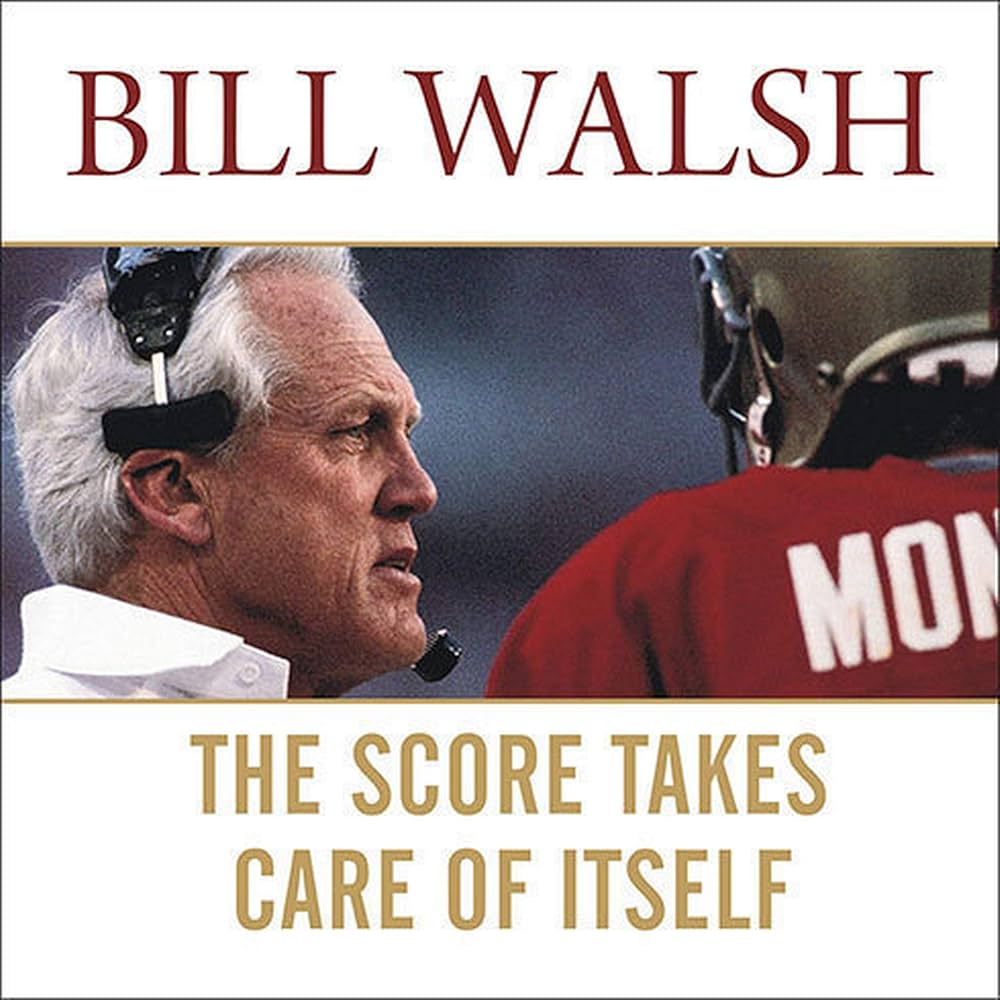
Opening
Whenever leadership comes up, people ask what success I’ve had to speak this deeply about it. The question is genuinely embarrassing, because I haven’t had any success in leadership. I was always the loner in whatever organization I joined, and from the days I ran my own startup to the most recent team, I have never once felt like I ‘truly’ belonged. When I was younger that was arrogance and self-delusion (“I’m different”). More recently it’s been my own laziness; I gave up trying to understand other people. And on top of that, I watched with my own eyes as the standards and principles I’d set, and the consistency I’d tried to keep, collapsed underneath me, and my sandcastle leadership went with them. (I don’t want to plead force majeure. I picked that team in the end.)
The small comfort is that out of every person I’ve worked with across my career (myself included, every boss above me, every successor below me) not one of them practiced anything I’d call real leadership. (Not one.) By my standards, most of them were closer to the worst end of the scale, and the funny part is I think I was at least a notch better than them. I still think so. (They’d disagree, of course. This is just my take.)
A leader needs to delegate to the right people on the right things. But naive delegation without trust is just laissez-faire dressed up as empowerment, and the ‘fake’ psychological safety you create by comforting people who failed is nothing more than my own small selfishness, wanting them not to be uncomfortable around me. The opposite is just as bad. When you can’t trust them and you pull every load yourself, the team never finds their own role, never grows or stretches in the right ways, and slips into the assumption that as long as they clock the hours, the leader will cover the rest. The team’s win is no longer their concern. They just want the company to keep paying salaries. So the question isn’t whether to delegate. Every team is different, every person is different, and calibrating the dose is genuinely hard work. There’s no leadership law that holds everywhere with the same shape.
I used to read everything on this. What makes a good team, why ‘psychological safety’ matters, why a winning team matters (which I wrote about three months ago in “Organizations that don’t win have no future”). At some point I realized how lazy and convenient it is to expect a book to hand you the answer. So I put all those leadership books down. Reading does sometimes give us unexpected lessons and experiences, but on the topic of leadership specifically, I’d dare to say this:
Close the book. Spend that time on a 1:1 with the people on your team right now. Then ask yourself whether what you’re doing is actually moving the team toward winning.
So the leadership fragments I share with people come from many places, but they almost always trace back to the same wounds: losing the details, falling out of alignment with the leadership above me, missing the small shifts in my teammates, failing to define what winning looks like. It’s less success than the residue of a long string of bone-deep failures I felt with my whole body during sleepless nights.
So this post isn’t a summary of Bill Walsh’s principles. It’s a record of the places I’m still failing. It’s closer to a notebook of the failures his book held up like a mirror.
Bill Walsh (1931–2007) is a football legend, and the protagonist of the cliché sports drama (a coach takes over a hopeless team, builds it into a champion, and keeps it there). He was the man who turned the dismal 49ers of the early ’80s into a dynasty, and one of the great leaders of that era. Three Super Bowl wins in ‘84, ‘88, ‘89, and famous for being the first to bring the ‘West Coast Offense (WCO)’ to a team. As an NFL outsider, what I read is that football history splits into before and after WCO. (I have never properly watched a football game. You really don’t need to know the rules to read this book.)
I don’t know NFL well, but Walsh’s leadership book is famous enough that I’d kept it on my shelf for a long time, telling myself I’d get to it. With no team members I have to do 1:1s with anymore, this felt like the right moment to look back at my own failures through it. Maybe the next time the chance comes around, I’ll be a little better.
What makes this book really good is the gap between expectation and reality. You’d assume an all-time-great American football coach wrote a book of his triumphs, war stories, and the leadership rules they produced. But the title (The Score Takes Care of Itself) names the leadership principle Walsh truly chased, and also, in the end, the principle he himself failed to keep. The kick of this book is in the second half. In the first half you underline his leadership principles one by one. In the second half the book changes character entirely. I’ll get into how it changes in the last section of the body.
He’s a leader from a different era, a different country, a different field, and his success isn’t comparable to anything I’ve done. But the fatigue, loneliness, exhaustion, and the open record of his mistakes and failures behind that success made the principles in the first half land harder than they would have otherwise. So this review ended up as the record of one person who keeps tripping over those principles, not as a tidy summary of them.
The score takes care of itself? Winning is still the metric
The Score Takes Care of Itself. When I first saw the title I was on guard. About three months ago I’d written a post called “Organizations that don’t win have no future.” I quoted “Winning solves everything,” took it as my north star, and wrote pretty firmly that a leader who can’t define winning for the organization eventually collapses. Then here was Bill Walsh standing in what looked like the opposite spot. Don’t chase wins. The score takes care of itself. Coming from the legendary coach who lifted three Lombardi trophies, the odds my view was wrong felt much higher.
To get straight to the conclusion, no, I wasn’t wrong. Walsh and I were looking at the same point from opposite sides. That came into focus near the last page.
In the chapter “The Prime Directive Was Not Victory,” Walsh says it like this:
“What it was, instead, was a comprehensive standard and plan for installing a level of proficiency — competency — at which our production level would become higher in all areas, both on and the field, than that of our opponent. Beyond that, I believed the score would take care of itself.”
— “The Prime Directive Was Not Victory” chapter
And in the same chapter he gets a little more honest:
“I directed our focus less to the prize of victory than to the process of improving — obsessing, perhaps, about the quality of our execution and the content of our thinking; that is, our actions and attitude. I knew if I did that, winning would take care of itself, and when it didn’t I would seek ways to raise our Standard of Performance. At least that was my plan.”
— same chapter
What stopped me was that last line: “At least that was my plan.” Walsh did not put winning aside. He chased winning by not openly chasing it. He obsessed over standards and process, and when that obsession wasn’t working, he says he’d find a way to raise the Standard of Performance. In other words, his process was still being graded by win-or-lose feedback.
So here’s how I sorted it: Putting winning first does not mean ignoring process. It’s the opposite. The principles inside your process have to be evaluable as ‘winning.’ A standard with no evaluation is a hobby. A process with no evaluation is self-comfort. Walsh could obsess over proficiency the way he did because the football world stamps a clear number on a scoreboard every Sunday. With wins and losses arriving every week, he couldn’t escape winning even without naming it out loud.
Business doesn’t work like that.
Aligning a whole business team around ‘winning’ is, honestly, a much harder job than football. We don’t get a scoreboard every week. Our ‘win’ might be a quarterly metric, a product metric, or a strategy that won’t be judged for three years. So if you let people focus only on process, no one ends up asking whether that process points anywhere. Each person works hard, but the directions diverge. (That was the “organization that hasn’t defined winning” I wrote about three months ago.)
Which means in a business org, having ‘winning’ get evaluated still matters. Even when you obsess over process the way Walsh did, the leader has to take responsibility for aligning what that process points toward. Saying “the score will take care of itself” inside an org where that alignment doesn’t exist looks, to me, like dodging the responsibility.
I think Walsh’s line should be read this way: Don’t give up the daily standards that point toward winning, not give up winning itself.
In the chapter “How I Avoid Becoming a Victim of Myself,” he repeats the same idea from another angle.
“The key to performing under pressure at the highest level, regardless of circumstance, is preparation in the context of your standards of performance and a thorough organizational embrace of the actions and attitudes contained in your leadership philosophy.”
— “How I Avoid Becoming a Victim of Myself” chapter
I was at “An organization that can’t even define winning falls apart.” Walsh, on top of his already-defined winning, was showing in his book how to live each day. When he wrote about “standards of behavior” and “organizational embrace,” I lost count of the times I’d failed to embed those standards in the orgs I’d led.
Good talent, bad attitude: I should have cut sooner
A person with good talent walks in carrying an attitude that doesn’t match the team’s standard.
Walsh tosses the line into a parenthetical.
“Whatever your specific job description, it is essential to our team that you do it at the highest possible level in all of its various aspects, both mental and physical (i.e., good talent + bad attitude = bad talent).” — “Standard of Performance” chapter
The parenthetical was louder. It’s one of the lines that made me put the book down for a long time.
Honestly, I learned this much later than Walsh did.
I worked with several people who kept building real depth in their craft but were terrible at collaboration and communication. There was a stretch when I got swept up in their talent and convinced myself their role still mattered. If this person leaves, this part collapses. There’s no immediate replacement. People might change with time. I kept feeding myself those excuses. I let the standard blur, I shrugged my shoulders, I went around explaining to the rest of the team that “that’s just how they are.”
Now I’m sure. If a person doesn’t carry the kind of attitude that lines up on the same side as the team’s standard, the right move is to cut them as soon as possible.
Walsh is brutal on this point.
“Individuals who fell short of the standard in various ways were usually quietly removed, and those who challenged my authority did so at their own peril.” — “The Prime Directive Was Not Victory” chapter
“Quietly removed.” No drama, no slamming the door, no public showdown. Just quietly, but firmly, out. The view from someone next to Bill makes it sharper.
“Bill was smart enough and willful enough that even a talented person who contributed to a negative organizational culture — who wasn’t a team player — would be let go.” — “Problem Solver” chapter
Letting go wasn’t itself the choice. The choice was not keeping them around for the sake of talent.
The most striking line was elsewhere. In “Seek Character. Beware Characters,” Bill turns the lens on himself.
“I tolerated this longer than I should have because of his talent. But his play, in that state, was a long way short of what it could have been if his head had been in the right place.”
Even Bill did this. The man with four Super Bowl rings and a Hall of Fame jacket carried someone “longer than he should have” because of talent. And he wrote it down as regret. In one line. I read that sentence over and over. I, too, carried things I shouldn’t have because of talent, and the team paid the price for it.
He hammers the point one more time in “Big Ego.”
“The damage that the arrogant egotist inflicts on an organization is always greater than the benefits he provides.”
Always. Coming from a writer who doesn’t reach for that word easily, the sentence sits heavier. Not ‘sometimes the harm wins.’ Not ‘on rare occasions the benefit loses.’ Always the harm wins.
What I’d actually been trapped by wasn’t the talent. It was the fear of losing the talent. The anxiety of “this person can’t leave” kept eroding my standards. The cost of that erosion fell on the rest of the team. While the talented-but-toxic person stays, the team’s “attitude standard” is set by them. The people with the right attitude start to wonder if they’re being too rigid. That’s the scene I saw too late.
Cut sooner. That’s where I land now.
Teaching is the definition of leadership, and I have no patience
In one of the most central spots in the book, Walsh nails it down.
“Leadership, at its best, is exactly that: teaching skills, attitudes, and goals (yes, goals are taught and defined) to individuals who are part of your organization. Most of life — running a family, educating a child, running a company or sales team, coaching an athlete — requires good teaching.” — “Teaching Defines Your Leadership” chapter
Not a leadership technique. The definition of leadership is teaching. Not strategy, not vision-setting, not decision-making. Teaching.
He calls teaching the team’s top priority.
“A Super Bowl championship (or attainment of the number-one ranking in the marketplace, hitting a meaningful quarterly production goal, or signing a big contract) occurs because the entire team not only does its individual jobs, but also recognizes that those jobs contribute to the overall success.” — “The Top Priority Is Teaching” chapter
“And this organizational recognition that ‘success belongs to everybody’ is what the leader teaches.” — same chapter
“Failure also belongs to everyone. If you or someone on your team ‘drops the ball,’ everyone is responsible.” — same chapter
He sums up his life like this near the end.
“Looking back, the lesson I would draw out is this: if you don’t love it, don’t do it. I loved it. Teaching others how to dig deep so they could realize their full potential, how to be great.” — “The Thrill of Teaching” chapter
Don’t do it if you don’t love it.
For a long time I believed I loved teaching. When juniors or new hires joined the team, I organized study groups to pull them along, taught the material myself when I had to. I think I put real effort into onboarding, code reviews, 1:1s. I always wanted to be a good coach, a good teacher.
The problem was speed. Each person needed a different amount of time before what I taught showed up in their work, and I didn’t tolerate the gap well enough. When the same problem turned up in the second review after I’d already explained it, my temper rose. By the third round my tone showed it. By the fourth I escaped into “it’s faster if I just do it myself.”
I wanted to be a good teacher, but I was less of one than I thought. Loving teaching and putting enough patience into teaching are completely different things. I couldn’t tell those two apart for a long time.
But the deeper sting wasn’t on the junior side. The second failure was with the senior people.
I decided I had nothing to teach the seniors. They work independently, I should protect their autonomy, they need to be self-driven to grow. Those judgments piled on top of each other and I effectively abandoned them. For a long time I called that autonomy.
Teaching didn’t have to stay in the technical lane. Direction of work, organizational principles, decision criteria, communication posture: all of these were within reach for seniors too. If anything, the more senior they were, the more I should have shown up. I papered over it with “they’ll figure it out.”
In some ways that was fine. They built a lot on their own. But the moment I realized decisions that shouldn’t have been made without me had already been made, and that I’d shrunk my own ground from inside, it was already too late. Abandonment wasn’t autonomy. It was just me dodging the work of teaching.
Walsh writes:
“Whether it’s a 350-pound tackle, an employee, or a child, we must do all we can to encourage, support, and inspire. But ultimately — finally — people must do it for themselves.” — “The Bubba Diet (Willpower Cannot Be Transplanted)” chapter
The line looks like it lets me off the hook, but it does the opposite. Walsh says “willpower cannot be transplanted” only after establishing that you must do everything you can to encourage, support, and inspire. The “ultimately, themselves” part only kicks in after you’ve done that everything. I skipped the prerequisite and pulled the conclusion forward. As an alibi.
He hammers it once more.
“Teaching and training others how to do their jobs.” — “Unleash Mentors” chapter
That, he says, is what a leader should ask of mentors. Which means the starting point has to be the leader being a teacher first.
What about me now?
In mentoring with George, in collaborating with Ellie, my patience is still short. The thoughts and ideas in my head are already several steps ahead, and I see myself getting frustrated when the other person can’t keep pace. After explaining once I want to wave it off with “okay, done.” When the person asks again, I can hear my tone get a little sharp.
Maybe it’s because I’m building product hands-on again. The person whose hands are moving has a fast head, and a fast head finds it easy to ignore the pace of the person next to them. But that’s a reason. It can’t be an excuse.
I see places where I’ve actually regressed compared to when I was managing as a full-time leader.
I thought stepping out of the leader role would make me a better person, but in some ways the opposite happened. There was a coat of patience that the manager position forced onto my shoulders. Once I took it off, what got exposed is that I’m not as decent without it as I’d hoped.
So lately I think about it this way. Before blaming the other person, I have to think about how I can deliver it better, sharpen it. Teaching isn’t completed when the other person receives it. It’s mine until I’ve delivered it well enough. I’m only now starting to grasp that.
The inner voice: what my black comedy planted
The most chilling line I’ve ever read in a leadership book is this one.
“The genuine inspiration, expertise, and execution that employees bring to the actual work is more often a result of what an inner voice is saying than what an outer voice shouts. Not the leader’s pep talk. What that inner voice says, leader, you decide. The leader, at least the good leader, teaches the team how to talk to itself. The effective leader has a deep impact on what that inner voice is going to say.” — “The Inner Voice vs. the Outer Voice” chapter
Not the pep talk. The inner voice. Not what gets shouted from the outside, but what your teammate says to themselves when they’re sitting alone. That’s what the leader plants. On the prior page he wrote this too.
“Leadership is expertise. It is not rhetoric, it is not pep talks. People follow those who have credibility and expertise — knowledge of the job — and who demonstrate an understanding of human nature.” — same chapter
And on how he handled his own language:
“When I criticized someone or gave feedback, I didn’t take a defeatist tone. I kept the focus on the moment, and didn’t drag in days or weeks of bad play to construct an image.” — “The Leverage of Language” chapter
Even when criticizing, he didn’t pull the past forward. He stayed in the present. Walsh knew his words rode on his teammates’ shoulders for days, weeks. He kindly wrote down the reason on the next page.
“If you’re seen as a constantly negative person who only ever points and criticizes, the people around you will simply tune you out. Your ability to teach, influence, and drive improvement shrinks until it disappears.” — same chapter
I couldn’t lift my head reading this part.
In the early days, when our team collaborated with other teams, I’d publicly criticize the other team’s not-particularly-startup-shaped responses and sloppy communication. When leadership made a decision I didn’t agree with or didn’t understand, I’d openly bash it in front of my team. I hoped it’d read as humor and as solidarity with the team, but that wasn’t always the case in the end. The moment I noticed my own tone reflected back in my teammates’ behavior, I tried to stop, but it was a little late.
Especially since my (self-proclaimed) black comedy was rooted in something hopeful: staring straight at the brutally frustrating reality and still believing we could do something inside it. That intent didn’t really land. (Maybe what didn’t land is the perfect black comedy(?).)
To be honest, I do think there was real conviction somewhere inside me at the time. The hope that we could build a better organization, that even on top of this obvious reality we could try something different. But what came out of my mouth wasn’t shaped like conviction.
What I’d actually been releasing wasn’t conviction. It was cynicism. That hit me bone-deep.
And cynicism is a far more contagious language than hope. By the time I tried to stop saying and doing those things, the words had already taken root in my teammates’ mouths, in our Slack, in our meeting rooms. What was left in the space I tried to clear wasn’t my intent. It was my tone. Walsh’s line about the leader’s words becoming the team’s inner voice landed exactly here, and it hurt.
There’s another memory layered on top of this. A story about the bottom 20 percent.
There was a chronic complainer (a real pro at it) on a team with a long history, and I never pushed back hard enough to stop the behavior. By the time I sat down for a 1:1 to try to win them over, it was already too late. That’s when it hit me. Especially when you’re higher up, you become the one who has to convince people, so you start looking for the positive over the negative, and at some point you’ve already started thinking that way yourself. But the more you hesitate to listen to what people are actually saying, the more that gap (my optimism vs. their pessimism) widens, until you reach a point of no return.
Walsh names the mechanism precisely.
“For reasons I never fully figured out, the complaints of the bottom 20 percent often overpower the positive enthusiasm of the other 80 percent. I always assumed it should be the opposite, but it’s not. The whiners seem to wield disproportionate influence.” — “The Bottom 20 Percent May Determine Your Success” chapter
I avoided that person’s face back then. I knew how heavy the air got in meetings when they spoke, and I told myself “it’s just that one person, the rest are fine.” I was scared that if I started taking in the negative signal, my own optimism would shake. While I postponed it, their cynicism was quietly becoming the team’s shared language. Walsh wrote this too.
“A leader who ignores this part of the organization — the ‘bottom 20 percent’ that holds special or supporting roles — is asking for trouble. When these people start feeling redundant, their grievances can spread through the whole organization like cancer through the body.” — same chapter
Spreads like cancer. Reading the analogy, I saw the scene of my own public criticism a moment earlier and the face of that complainer overlap onto the same picture. The cynicism I sprayed from above and the cynicism I left untouched from below were running through the same vein.
A leader’s language doesn’t move in one direction. It falls from the top down and becomes the inner voice, and if you don’t face the discontent rising from the bottom in time, it spreads back up in the same color. Sitting between those two flows are the few weeks or months you hesitated to listen. The gap widens by the exact amount of time you avoided listening, and the organization quietly buckles.
Upward leadership: why Bill spent a chapter on the owner
Open most leadership books and they’re about leadership pointing downward. How to lead the team, how to teach them, how to motivate them. It fills entire bookstore aisles.
But upward leadership is something I’ve never properly learned anywhere. Bosses, boards, investors, owners. No one explains how to handle the people sitting above your head. As an individual contributor it’s relatively simple, since there’s only one boss. The moment you become a middle manager, that relationship becomes half of your job. A half that’s sometimes heavier than performance.
So I was a bit surprised when I got to the chapter where Walsh devotes a section to owner Edward J. DeBartolo Jr. A legendary coach, in a post-retirement memoir, pours out criticism of the man who gave him his shot, to a degree that makes you wonder if he’s allowed to say all this.
What’s even more striking is that at the end of the long stretch of criticism, Walsh comes back around and reminds you of the gratitude for the chance Eddie gave him. The same Eddie who handed Walsh the leadership stage was also the cause of that leadership slowly breaking down. One person built and chipped at Walsh’s career. He puts that duality right in the middle of the book, no covering up.
Walsh recalls his earliest days as head coach in the chapter “Autonomy and Authority.”
“Equally important, he made it clear to everybody in the organization that I was the boss, and he wasn’t going to undercut my authority. Without this authority and support my task would have been virtually impossible, given how dire the situation was.”
Authority and support. Without those two words, the work of a middle manager is “virtually impossible,” he says flatly. As you move toward the back of the book, you see what happens when that authority and support are slowly pulled back, and that’s exactly what the chapter on Eddie is.
The title Walsh gives this situation is bleakly fitting: Ride It Out Until Help Comes; Hold On to Your Boss.
“You have to keep the people above you, who want immediate results, from acting rashly, while at the same time working with the people below so they don’t quit or rebel.”
The whole life of a middle manager fits in that one sentence. The top is impatient, the bottom is exhausted. You stand in the middle and have to hold both sides at the same time. Let go for a moment and one side falls.
His prescription is oddly tactical.
“I wanted the owner (and his advisors) to understand that I was making the maximum effort and paying attention to every small detail of the family’s huge financial investment.”
“He was a really great boss to work with in the early years when I was head coach and general manager. To some extent that was, I think, because my constant effort to keep him fully in the loop gave him a sense of relief.”
And the famous line.
“Read or unread, dump documented information on your boss — projections, evaluations, progress reports, status updates. Then request regular meetings. Make it clear, in a very professional way, that the boss should understand you’re doing everything you can and that it’s all documented — in fact it’s right there in the thick folder in their hand.”
The advice from a coach who lifted three Lombardis turns out to be the practical tip of flooding your boss with information so they feel relieved. Read or unread, doesn’t matter. The sense of a thick folder in hand calms the upward axis. At first it was practical to the point of being funny. By the end I couldn’t laugh. That sentence is closer to a survival manual pulled from the most exhausting season Walsh lived through.
He adds one more line. Keep your eye on the ball.
“While placating the people who can determine your fate during a losing stretch or a turnaround — bosses, boards, shareholders — you must, at the same time, stay absolutely focused on what really matters.”
Soothe the top. At the same time, stay absolutely focused on what really matters. Two commands sit calmly inside one sentence. Walsh says it’s possible, but he also seems to know how cruel the demand is. A whole chapter is the record of that cruelty.
I overlaid the companies I’ve passed through onto the relationship between Walsh and the owner. The personalities differed, but the structure was similar. Upward leadership is at least as important as downward leadership, if not more. I’ve felt that to the bone, more than anything else. And ironically, the people who opened the door to my leadership and the people who became the reason that leadership broke were, in some sense, sitting in the same spot.
I can’t put my specific experiences here. I don’t think I should. But I’d guess that almost everyone working as a middle manager is wrestling with some version of the same dilemma somewhere. Absorbing the impatience of the top, absorbing the fatigue of the bottom, while their own exhaustion stays invisible to anyone.
Did I crash through, or did I give up?
In the second half of the book Walsh leaves this line.
“Looking back, I came to the conclusion that there are times you have to stand up for yourself even if the result is that you get fired. As proven by the fact that I didn’t do it myself, easier said than done.” — “Zero Points for Winning” chapter
This is Bill Walsh. The man who lifted three Super Bowls. Even Bill confesses, “I did not stand up for myself.”
He also wrote this.
“Everyone has opinions. Leaders are paid to make decisions. The difference between offering an opinion and making a decision is the difference between working for a leader and being one.” — “The Common Denominator of Leadership: Force of Will” chapter
“If I was going to come apart, I wanted to come apart for the right reasons. (…) The hardest thing — the unforgivable thing — is failing to admit your way was the wrong way and failing even when changing course is the only path to victory.” — “Be Wrong for the Right Reason” chapter
Place these two next to each other and the chill sets in. Decisions, not opinions. If you fall, fall for the right reason. Did I actually live that way?
To be honest, no.
I genuinely believed certain approaches weren’t the way to win, but in moments where I didn’t want to take responsibility (or didn’t even want to be the one accountable) I always compromised. I had opinions, I could even see the answer, and I stepped back because I didn’t want to sit in the chair of decision. That wasn’t yielding. That was running.
I don’t want the cheap comfort of “well, that’s office life.” Because it’s a lie. Those compromises eventually become wounds you carry. Those scenes don’t get erased; they pile up quietly and one day come back as the question, “Was I really a leader then?”
In the same room where Bill Walsh confesses that even he couldn’t stand up for himself, the only thing I can do is throw the same question back at myself, not make excuses.
“Did I really push back with everything I had? Or did I just give up?”
Everything has its cost
In the first half I kept underlining Walsh’s principles. Standards, teaching, attitude, the inner voice, upward leadership. There was so much to learn that at some point I started wondering, “How did this one man have all of it?” Then in the second half the underlines changed character. I wasn’t stopping at his moments of victory anymore. I was stopping at his moments of collapse.
Walsh warns first.
“The reason consecutive champions are rare at the top of competition is that a certain measure of success brings with it a kind of disorientation we’re not prepared for.” — “Winning Is Harder to Handle Than Losing” chapter
And one chapter later he adds:
“When things are going best is when you have the chance to be your strongest, most demanding, and most effective as a leader. A strong wind is at your back, but to keep that wind from knocking you over, you have to understand the dangers winning brings.” — “Why Repeat Championships Are Hard” chapter
The dangers winning brings. That phrase stuck with me. We usually only think about the dangers of failure, but Walsh flips it. The truly dangerous time is when things are going well. And this warning isn’t just strategic advice. It was something he was saying to himself, which becomes more obvious as you read on.
There’s a chapter where he opens up his interior. The title is “The Perfection of the Puzzle.”
“I didn’t want to lose by 40 points. I’d prefer losing by 39. When we won by 20, I’d wake up in the middle of the night thinking hard about how we could have scored 21.” — same chapter
A man who, on a night the team won by 20, wakes up to think about how they could have scored 21. That’s Bill Walsh. Even in a victory, replaying through the night the reason they didn’t score one more point.
He keeps writing.
“Did I miscalculate or ignore information I could have seen there? Why and where did our execution break down? Of our decisions, of my decisions, which were wrong or completely off? Endlessly, endlessly, endlessly. What I was pursuing, I think, was perfection.” — same chapter
Endlessly, endlessly, endlessly. You can see how he lived in the way he repeats that word three times. And he diagnoses the root of his own perfectionism.
“All of this was less about scoring more points or losing by fewer than it was about how I had come to perceive the entire process of leadership and the effort to succeed. To me, it was a puzzle to solve, pieces to find and place, solutions to work out.” — same chapter
The engine of his greatness was also his blade. He knew it best himself.
And then the heaviest chapter in the book arrives. “Zero Points for Winning.”
“I gave myself zero points for winning.
Winning was nothing more than postponing the pain of losing. I’d quickly turn my attention to the next game, and the next, and each one offered nothing but a chance to push back the dread that comes with losing — without ever removing the dread itself.
When this happens, any defeat or mistake or setback becomes deeply unsettling, even destructive — because you’ve attached your self-image to the outcome of competition. Winning becomes harmful for the same reason. You’re letting winning start to define your sense of worth, your feelings about yourself.” — same chapter
I closed the book for a moment in front of this passage.
A man who lifted three Lombardi trophies confesses he gave himself zero points for winning. Those trophies weren’t joy; they were painkillers that briefly delayed the dread of the next loss. And after the confession, one line: “Because you’ve attached your self-image to the outcome of competition.”
I’d done that too. There was a time I dragged outcomes into my self-worth. When metrics went up I felt like a decent person; when they cracked I felt worthless. I didn’t know back then that, lived that way, even winning is harmful.
Walsh also wrote about how the bill comes due.
“The volatility of the environment and the emotional drain can completely deplete you, and you live with it constantly. It can leave you very vulnerable, very weak.” — same chapter
And he leaves himself a warning.
“Avoid the destructive temptation of equating your team’s win-loss record with your own self-worth.” — same chapter
You only feel the weight of this line after the confessions before it. This isn’t theory. It’s the last warning Walsh leaves himself, and the people walking the same road he walked.
He looks honestly at where his perfectionism began.
“In the early days I was the same. I firmly believed that if I did my job well, the score would take care of itself. When it didn’t, I worked harder to improve coaching and raise the team’s standard of performance. This was one of the reasons I drove myself so relentlessly.” — same chapter
Even his philosophy of “the score takes care of itself,” flipped over, was the engine that drove him relentlessly into himself. At this point I accepted that this book is less a leadership textbook than one person’s confession.
The book’s final chapter is written by his son, Craig Walsh. A chapter about his father. The title is “THE WALSH WAY: A Complex Man. A Simple Goal.”
“He was a perfectionist, and perfection, he believed, was only achievable when his ideas and decisions were fully realized — not filtered through other people, who, in his view, would inevitably misunderstand and misapply them. He had to be the one in charge.” — same chapter
A son’s view of his father. Not warm, not cold, just as is. The son sums up in the shortest sentence why the great father couldn’t let himself go to the very end.
And the book’s final paragraph.
“My father is gone, but the leadership lessons he earned through blood and sweat remain. Maybe more meaningful now than they’ve ever been. I know he would want something he shared in this book to be of value to you in your own challenges as a leader. That would mean he could once again do the thing he loved and did so well. Teaching others how to be as great as they can possibly be.” — last paragraph of the same chapter
I sat with the book closed for a while at this last paragraph.
It felt like watching one human’s great and intensely personal history.
A book that started as a leadership book and ended as a life. A man who woke at midnight to think about scoring one more point on a puzzle he was solving. A man who gave himself zero points for winning. A man who, never having reconciled with himself, wrote it all down in a book and left. His son closes the book by carrying his lessons in the last chapter.
There was relief. Even a man whose success I can’t compare myself to was like this. The huge shadow and the huge cost made my small failures feel a little less alone. So you went through that too, I thought.
There’s also a cool warning in it. Considering the cost Walsh paid, what would I get from walking the same road, having not even brushed against his level of greatness? As long as I tie my self-worth to outcomes, winning chews me up and losing breaks me down. There are no exceptions. If even Bill Walsh wasn’t an exception, I sure won’t be.
So Bill restates the message he always pointed toward, even though he himself never fully reached it.
“The score takes care of itself.”
Closing: beyond leadership, toward being a slightly better person
A few days passed after I closed the book.
The first thought was the same one I’d written in the opening. “Maybe the next time the chance comes, I’ll be a little better.” Next time, I’ll put Walsh’s underlines to better use. That kind of expectation.
But as I sat with this review and pulled myself apart section by section, that sentence started to feel a little suspicious.
Next time. Is that really what matters?
I was imagining a “next leadership opportunity” and quietly suspending the version of me that exists right now. Next time I’ll do it properly. Next time I’ll be the patient mentor. Next time I’ll be a leader aligned both upward and downward. The vagueness of that “next” was building an alibi for today’s laziness.
And the place I stopped longest in Walsh’s book wasn’t the strategy or the principles. It was this passage from “Quick Results Come Slowly.”
“I believe this is true in your work as well. The effort at the start is part of a continuous effort, and your standard of performance is part of a continuous standard. Today’s effort becomes tomorrow’s result. The quality of that effort becomes the quality of the work. One day connects to the next, and the months connect to the years that follow.”
— “Quick Results Come Slowly: The Score Takes Care of Itself” chapter
One day connects to the next. A separate “next chance” doesn’t arrive. How I speak today, how I listen, how patient I am, how I push back: that exact thing rides forward into tomorrow. On the same page Walsh closes with this.
“Your own standard of performance becomes who and what you are. You and your organization achieve greatness.” — same chapter
This sentence shook me most on this read. “Your own standard of performance becomes who and what you are.” It’s the last line of a leadership book, but once you’ve read it, it doesn’t only sound like a leadership line. It reads as: the standard I allow myself today becomes who I am.
So what I have to fix isn’t “the next-chance me.” It’s the me right now.
Beyond leadership, in a single line of feedback I trade with Ellie while building product, in mentoring sessions with George, in the brief conversation with someone I happen to run into at a café, the small refusal to stop becoming a slightly better person. Not the grand restoration of leadership, but that level of diligence.
Honestly, this is something I’ve already written about. Tucked away in a corner of the blog I once wrote a piece called “Be curious, not judgmental.” It was a note to myself: don’t judge people quickly, hold curiosity first and look once more. I’d long forgotten that note. The recent me has been judging first quite a bit. Getting frustrated. Reaching the conclusion before anyone else.
I think I need to take it up again. With more room, kind but rigorous, a life that keeps reaching for a little better. When Walsh writes elsewhere that “You Must Have a Hard Edge,” he doesn’t mean coldness. Kindness and rigor aren’t opposites. I was simply short on both.
If I can become that person, the score will probably take care of itself.
Walsh’s original line was about teams and organizations. As I closed the book I decided to take it home in a single-person size. If today’s standards decide who I am, tomorrow’s score will follow on its own, even when I’m not watching. At least, that’s what I want to try believing.

댓글
댓글을 불러오는 중...
댓글 남기기